The area of Albert Mines, in southeastern New Brunswick, is steeped in history, from the discovery of the shiny black rock classified as albertite to the invention of kerosene.
And the list goes on.
But another critical inventor stood on the land once home to the busy mining town.
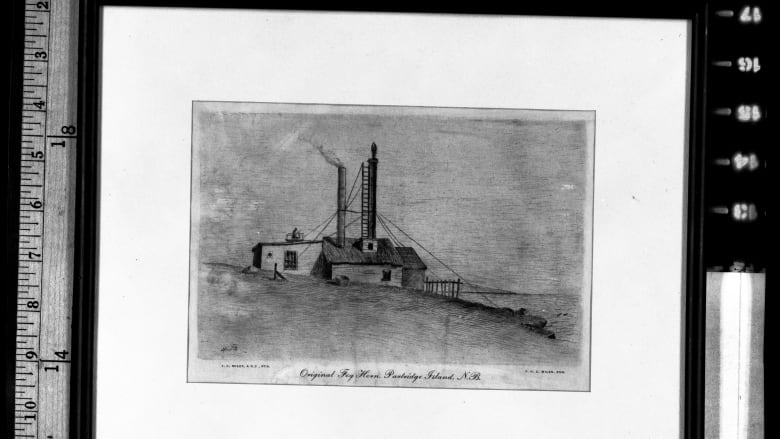
His name is Robert Foulis and he founded the first steam-powered fog horn.
Foulis, originally from Scotland, lived in the notoriously foggy Saint John, said Roadside History columnist James Upham.
And at the time, in the mid-1800s, there was an issue with ships crashing into Partridge Island, in Saint John Harbour.
“People kept dying,” said Upham. “They tried a big bell, they tried a cannon, they were trying to figure out how to make noise in the fog to warn people not to hit Partridge Island.”

Upham said that one night, Foulis was walking home and heard his daughter playing piano. He listened to the low notes from the instrument and realized that the things they had been trying were too high frequency.
“They don’t even know about frequencies yet, but he realizes that high notes don’t work, low notes do, and he uses that basis to invent the thing that we now call the fog horn,” said Upham.
“It might sound kind of silly, but the steam fog horn has saved unbelievable numbers of lives and just prevented incredible numbers of tragedies over decades and well over a century.”

Upham said that after that, Foulis started looking at ways to better illuminate lighthouses, so he patented a perfected way to turn coal into gas. But a man named Abraham Gesner also tried to patent the same thing. The situation, said Upham, is not as clear-cut as people might like it to be.
“Foulis is one of these characters that somehow has been … almost kind of sidelined, perhaps because he had this amazing invention with the fog horn,” he said.
But even that didn’t bring Foulis fame and fortune because he didn’t patent it — someone else did.

An article in the New BrunswickMagazine, written by Percy Hall and published in November 1898, is titled, A Misplaced Genius. It tells the story of Foulis, his invention and how he was pushed to the side.
“Had Foulis had a different environment, had he been under the guidance of a clear sighted patron, he would have been a famous man,” Hall wrote.
“As it was, he lived and died a misplaced genius.”
The article even mentions Foulis’s grave in Saint John’s Rural Cemetery, now known as Fernhill, noting that he is buried in a plot with no stone to mark his name.
- Roadside HistoryMove over Beverly Hillbillies, N.B. has its own rags-to-riches tale about oil
- Roadside HistoryThis grave along Grand Lake offers a look back at an N.B. ‘engineering genius’
Upham said when Foulis died in 1866, he was in his 70s and had had a long, fascinating career. But that career was not a profitable one.
“We’re standing here talking about people who have stood right here and knew exactly what we were talking about,” said Upham, speaking from the empty field near the overgrown mine entrance.
“Robert Foulis has been here. Abraham Gesner has been here. Edward Allison has been here. Charles Lyell — who founded the thing that is geosciences — has been here.
“This is one of the most fascinating places on earth.”
With files from Khalil Akhtar
This story was originally published in CBC News on Aug. 18, 2024.
 Hannah Rudderham Portfolio