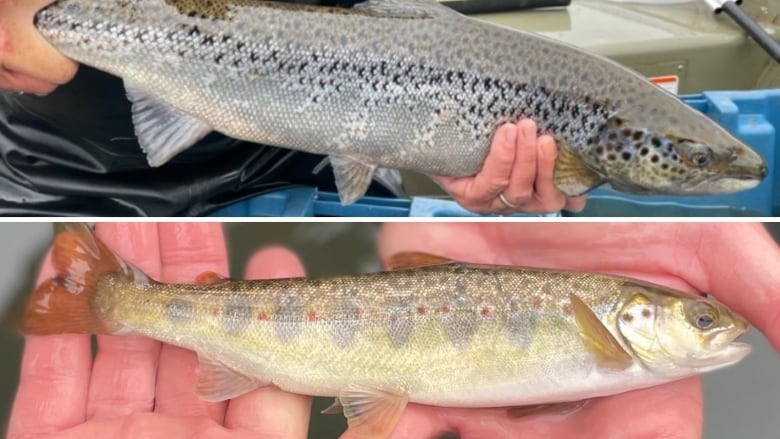
After 14 years of working to restore the Atlantic salmon population in the Petitcodiac River and its tributaries, things are looking up for the species.
Edmund Redfield, a fisheries biologist with the Fort Folly Habitat Recovery program, said the tide coming in under the Honourable Brenda Robertson Bridge, between Moncton and Riverview, is larger than ever before.
“The channel under the bridge is about 160-metres wide, as opposed to the 50 metres of collective access through the gates of the constant control structure,” he said.
“We’ve had much larger tides every year, year over year, since the gates were open, but even then more so since the channel was opened under the bridge. And that’s made it a lot easier for fish to come upstream.”

Redfield said instead of fish having to find their way through the gates, they have a wide-open channel that is easier to access, especially for American shad, a rather skittish species.
The causeway, which opened in 1968, was a point of contention among some area residents and pitted environmental groups against homeowners on the river’s headpond, known as Lake Petitcodiac.
A restoration project began in 2008 under former premier Shawn Graham’s government, which opened the causeway’s gates so the water and fish could move freely.

Six years later, a new bridge to connect Riverview and Moncton across the Petitcodiac was announced, and it opened in September 2021.
Increase in juvenile activity
Another win for the salmon population, said Redfield, was the unusual number of juveniles recorded in 2023.
In the fall, he said there were quite a few precocious parr — juveniles seeking out adult salmon for mating.
“In the last six years at our current site we had just one between 2018 and 2022,” said Redfield.

“But in 2023, we had nine of these over just a two-week period, many of them coming even before we did our adult releases. So we knew they were responding to adults that were in the river on their own.”
Redfield said the parr take the opportunity to help fertilize eggs that females bring back from sea with them. He said if there aren’t enough male salmon, a lot of eggs tend to go unfertilized, but the juveniles in the Petitcodiac are now in a position to help.
As the juveniles continue to help fertilize the eggs, more juveniles will be born and the population should continue to grow.
- Water flowing under new Petitcodiac bridge an emotional sight for advocate
- Former Fort Folly First Nation chief remembered as environmental steward, avid fisher
Also, Redfield said the Petitcodiac hasn’t faced much threat from invasive species, except for one goldfish found last year and another in 2019.
And small-mouth bass haven’t been seen since 2018, although the group does have the license to euthanize them if one is found.
The same goes for chain pickerel, which Redfield said the group is also authorized to euthanize, however they haven’t been seen for some time.
With files from Information Morning Moncton
This story was originally published in CBC News on Feb. 12, 2024.
 Hannah Rudderham Portfolio