When the Beaverbrook Art Gallery sold an original painting donated to the gallery by Lord Beaverbrook, questions surfaced about why these decade-old paintings would be auctioned.
At the time, executive director Tom Smart said the process, called deaccessioning, is a continuing one, undertaken to add to the gallery’s acquisition fund, which would allow for the purchase of new works.
“We can purchase Indigenous art, [art from] racialized artists, LGBTQ work that would really, as I say, deepen the collection,” he said.
The gallery shed several works of art this year.

But one that sparked some public attention was Beach Scene Lancashire by L.S. Lowry, which sold for just more than $2 million Cdn, of which approximately $1.6 million which will go back to the Beaverbrook.
Smart had said the painting was one of many Lowrys in the collection and wasn’t the best from his scope of work, despite its being a less common scene for the British artist to paint.
The auction raised some questions: Why are these paintings deaccessioned and how does the gallery choose which paintings to give up?
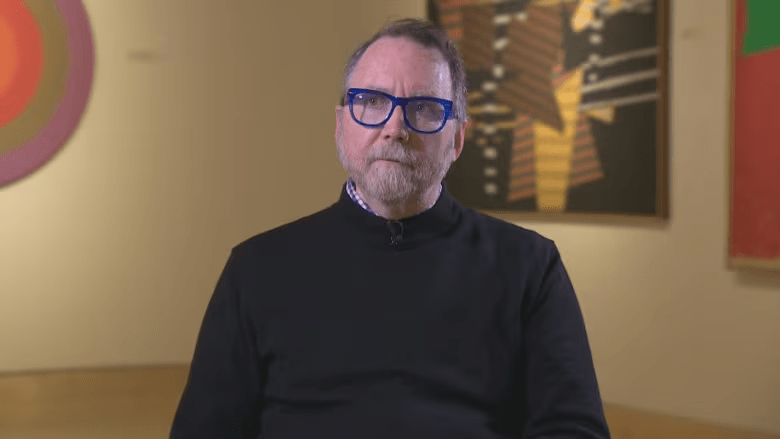
Ray Cronin, Beaverbrook’s new Canadian art curator and the former CEO of the Art Gallery of Nova Scotia, has some answers.
He says deaccessioning has become the norm in museums, and in some ways, even a necessity.
“When this gallery was founded in 1959, I forget the exact number, but it was something like 400 works that were gifted,” Cronin said in an interview after his appointment was announced.
“The collection has over 6,000 works now. At most, we might have 250, maybe 300 works on view at any given time.
“If you keep collecting, which is part of our mandate, and there’s always a new generation of artists, … do you want to tell a New Brunswick artist born in 2024 that their work will never be collected by the provincial art gallery? It’s impossible, right?”

At some point, Cronin said, the gallery runs out of places to put things. So conversations are needed about what art is actually going to be displayed and whether a work might be better shown somewhere else.
And since all of the money from the sold items will go into an acquisition fund, Cronin said, this will allow the gallery to fill some gaps.
One artist on Cronin’s mind is Jean Paul Lemieux, a 20th-century Quebec painter, whose work is not represented in the gallery.
Another, he said, is Norval Morrisseau, an Anishinaabe artist. Cronin, who is also the author of 14 books on Canadian art, said the gallery has one Morrisseau piece on paper, and while he said paper works can be wonderful in an album, they can’t be left up all the time.
But Cronin thinks Morrisseau is one painter that Beaverbrook’s audience should be able to see at all times, which is why he hopes to acquire more.
Though, with both of those artists, Cronin said having the money doesn’t mean the gallery would get the work.
He said Lemieux and Morrisseau are both museum-scale artists, their work is in high demand, and it doesn’t always come up for sale.
But he said part of his job is to travel around, browse auction catalogues and peruse online sales to keep up with when works will become available.
The sale of the Lowry painting gives the gallery a better shot at works of art it wants for its collection.

“If one was actually available, we’re in a position to make an offer, which we wouldn’t have been this time last year,” said Cronin.
He sees the acquisition fund as allowing the gallery to plan in the longer range as well.
“I have no interest in going and spending the next three months spending $1.6 million in a great big crazy buying spree — that’s not going to happen,” Cronin said. “And it is really about being extremely careful and very prudent.
“Those are immediate holes that I see that are going to take some work, but you know, they are work that needs doing and are worth doing.”
With files from Rachel Cave and Information Morning Fredericton
This story was originally published in CBC News on Dec. 3, 2023.
 Hannah Rudderham Portfolio