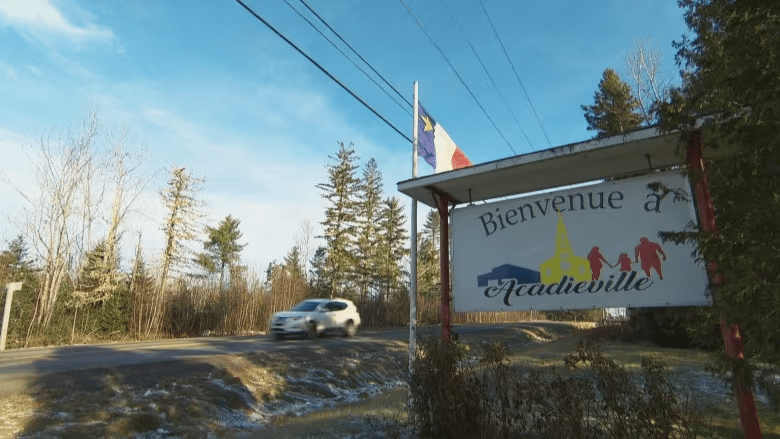
Old Order Mennonite families from southern Ontario have placed an offer on about 1,000 acres of land in Kent County, where there is hope the new community will bolster efforts to revitalize agriculture.
Paul Lang, the CEO of the Kent Regional Service Commission, said the commission has been working for five years on a project to bring Mennonite or Amish communities to the area.
“We thought this was a great opportunity for us to bring back agriculture in a region that [valued] agriculture for the last century,” he said.
Lang said three Mennonite families from Lucknow, Ont., have confirmed their intentions to come to New Brunswick and are confident others will follow. He said six families are needed to officially create a Mennonite community.

The land the farming families want to buy is on Richard Village Road in Acadieville, known locally as North Branch. He said everything should be finalized early in the new year.
Lang said more education of Kent County residents will be needed about who the Mennonites are and how they live their lives. But since the official move might not come until late 2024 or early 2025, there’s time to do that.
Although many Mennonites today are part of a more mainstream culture, the members of the Old Order group from Lucknow travel by horse and buggy, which means some accommodations will be needed in the area, including possibly putting up posts for the horses at certain locations.
At the beginning of the process to attract Mennonites to the eastern New Brunswick community, the commission brought in a consultant to prepare packages about available land.
That consultant was Gerard Thebeau, a Richibucto resident and agrologist, who described an agrologist’s job as serving the agriculture industry with professional standards.
Thebeau said Kent County has deep roots in agriculture, but a lot of farmland has been lost over the years.

For years, many farms in the area concentrated on brussels sprouts, but the industry went into decline and a lot farms stopped operation altogether.
At an agricultural forum put on by the service commission in 2019, Thebeau said, he and others planted the idea with commission of trying to attract Mennonite and Amish farmers to the Upper Rexton area.
Thebeau said being from the Acadieville area, he knew there was a lot of farmland at one point, so with the commission’s help, they included that area as one potentially suitable for such a plan.
In his conversations with the Mennonites interested in coming to New Brunswick, Thebeau said, he learned the growing cost of land in Ontario was making it difficult for them to compete.
“They’re located in the Lucknow area,” Thebeau said. “It’s dairy industry country, and dairy industry is much more lucrative.”
Thebeau said for the Kent County land to be ready for agricultural use again, it will need to be plowed, the pH level will need to be adjusted, and a rotational crop will need to be planted. Some of the land will have to be cleared and levelled.

Thebeau relayed some written questions from CBC News to the Mennonite families involved and is awaiting a response.
Lang said the commission is also looking to use its monthly newsletter to explain certain aspects of Old Order Mennonite life, including buggy transportation on public roads.
In Prince Edward Island, where several Amish families from Ontario have settled in the last decade, there have been cases where carts have been overturned by vehicles.
According to Conrad Grebel University College, a school established by Ontario Mennonite leaders and affiliated with the University of Waterloo, Mennonites are a diverse group.
Of the 59,000 Mennonites in Ontario, only about 20 per cent are members of conservative groups, such as Old Order Mennonites or Old Colony Mennonites.
The web page says that according to data from 2011, there are around 175,000 Mennonites in Canada.

It says each group has its own unique outward practices and historical development, while still sharing certain foundational religious beliefs with the others.
Kent North MLA Kevin Arseneau said he thinks attracting Mennonite communities to the area is part of the solution to revitalizing the region’s agriculture sector.
But he also sees it as an opportunity to think about how to get more young people interested in agriculture.
- Already Canada’s priciest, Ontario farmland could hit new record values, analysts say
- Farm safety and mental health program to fill the gap in N.B.
“How can we also think long term and see all our lands that are already fields really become repurposed into producing food for New Brunswickers?” said Arseneau.
Thebeau said that right now, the province imports a lot of food.
He pointed to the 2021-2025 local food and beverages strategy from the provincial Department of Agriculture, which says New Brunswick is highly self-sufficient in potatoes, blueberries, seafood, maple syrup and cranberries, but it lacks in other areas.
The strategy says New Brunswick is far from self-sufficient. In vegetable production, if potatoes are excluded, it’s only seven per cent self-sufficient, in fruit 32 per cent, beef and veal 45 per cent, pork 22 per cent, and grains and oilseeds at 64 per cent.

Recalling shortages during the COVID-19 pandemic, Thebeau said it would be nice to have more food production in those areas right in New Brunswick in case of future restrictions on the transportation of goods.
“I believe personally that it would be nice to have a food bank in our backyard in case we have a political problem or any kind of a problem that transportation of goods is restricted to our province,” he said.
“Because if we would, I think it wouldn’t take us long to be glad that we have farmers in our backyard.”
This story was originally published in CBC News on Nov. 29, 2023.
 Hannah Rudderham Portfolio