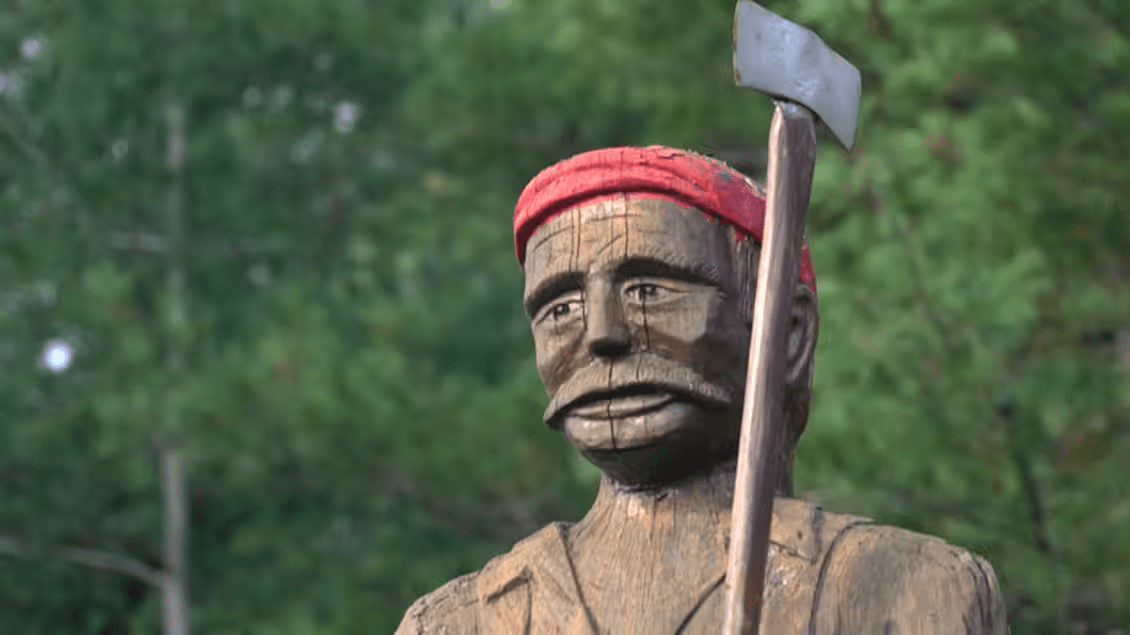
Lumber camps were once a way of life for many New Brunswickers during the long winter months.
They would crowd into small shacks, sleep side-by-side and eat meals on long wooden benches before beginning the day’s logging.
The lumbermen would work other jobs as well, such as farming and acting as fishing guides on the Miramichi River.
Original pieces of this history are still kept in the province to this day — in Boiestown — on the 15-acre property of the Central New Brunswick Woodmen’s Museum.

The collection of axes, canoes, tree bark and replicas, along with cabins and Quonset huts, tells the story of the men who worked in the camps.
But two years ago, that history was put at risk of disappearing because of a flood that destroyed artifacts and paper archives in the museum’s main building.
Now, with the help of government funding and community members, vice-president Greg Munn said the museum is finally getting its “chin above water.”
“The lumbering industry was important to New Brunswick in general, and it plays a big [part in the] history of where we’ve come from and the hard work that’s been put into settling these small towns and villages,” said Munn.

“And I think it’s important that we can look back and appreciate the work that’s been done to see where we are today.”
In April 2021, Munn got a call during the early hours of the morning after just getting off a night shift. The museum director at the time told him the main building was filling with water.
Munn rushed to the property, about a 20-minute drive, and even though the door had been opened to let water flow out, he said it was still knee deep.
Within the hour, the fire department was there and community members came to help.

“We had volunteers show up and we were filling [sandbags] and pushing out water and trying to save artifacts and putting them up to the second floor. So it was a hectic day,” Munn recalled.
Christine Jean, the current director of the museum, said she was made aware of the flood during her interview for the job last year.
She said she was told that some artifacts and archives were damaged during a flood, but it wasn’t until she began in her new role that she realized the extent of the problem .
Today, piles of archival material still sit in freezers at the museum awaiting digitization, in an attempt to stop the water-damaged papers from becoming mouldy.

The flooding caused damage to the main building’s foundation and all the carpets needed to be replaced, said Jean.
A large berm was built on the property to stop and absorb any water flowing downhill. and additional culverts were added to the stream for better water flow.
The Atlantic Canada Opportunities Agency and the Regional Development Corporation contributed just over $208,000 for the repairs, while the remaining 10 per cent will be paid for by the museum.

Still, Jean said for the non-profit, 10 per cent is a lot when referring to hundreds of thousands of dollars.
Along with that, at the time of the flood, the museum incurred high costs in the form of hydro bills as dehumidifiers were running constantly and the heat had to be cranked to dry out the building.
Despite the mountain of costs, Jean said preserving the history is important.
“There’s no better place to experience the history of a place than to be in that place,” she said.
“So this is a place where lumbering is really important. It has contributed to the lives of almost everybody who lives here and to be able to understand and explore that history, there’s no better place than here.”
This story was originally published in CBC News on Oct. 24, 2023.
 Hannah Rudderham Portfolio