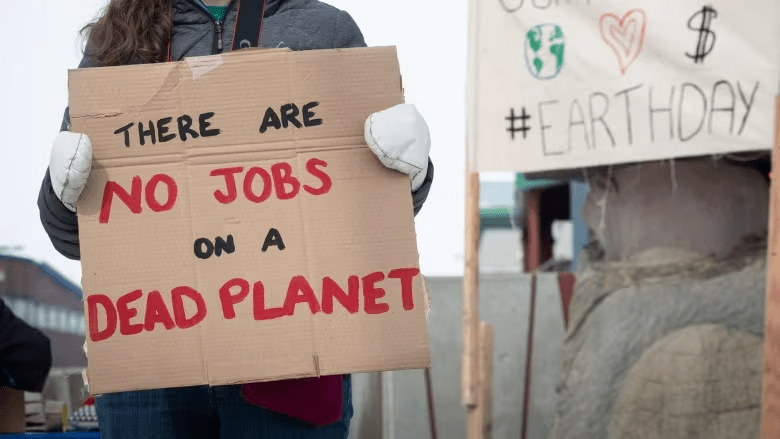
For students in the environment and natural resources program at the University of New Brunswick, Earth Day is just one day of the year to talk about the roles that industries and individuals play in addressing climate change.
Helen Vallieres, a second-year student in the program, said she wholeheartedly believes that every person should do their part for the Earth, but at the end of the day, she said it’s the big industries that play the largest role in climate change.
But she said that doesn’t mean individuals can’t influence change at an institutional level. She said this includes participating in democracy or writing letters.

“The general public … we’re the majority,” said Vallieres. “So if we all kind of band together more than we have been, I think we could put enough pressure on institutions … that would create system change.”
Alex Crawford, a third-year student, said while it’s larger corporations that are driving climate change and greenhouse gas emissions, he believes there’s still some personal responsibility because companies “wouldn’t be doing it if we weren’t buying it.”
Crawford said it’s important for people to be conscious of what they buy and what they do with it afterwards.
“There’s no ‘out,’ like when you say about throwing something out. It just goes down the road,” said Crawford. “You might not have to see it every day, but it’s still there causing an effect somewhere on the planet.”

According to the United Nations Alliance for Sustainable Fashion (see external link), it’s estimated the clothing and textiles industry is responsible for between two-to-eight per cent of the world’s greenhouse gas emissions — more than all international flights and global shipping combined.
For example, Chinese fashion site Shein has captured the attention of younger consumers in recent years because of the significantly lower price point.
But Holly Carter, a third-year student, said when having the conversation about supporting businesses that may not be sustainable or proactive, it’s important to talk about “financial privilege,” which refers to advantages people have in society because of their economic status.
She said that having the ability to not buy from environmentally-unfriendly companies is something that might be more possible for middle income people.
According to Statistics Canada, New Brunswick has an 8.1 per cent poverty rate as of 2020.
Carter said in recognition of the poverty rate, inclusive conversations around consumerism need to be held.

“Do those people have the option to vote with their dollar? Not really. They have the option to stretch their dollar. That’s the only option they have,” she said.
She said this is why businesses need to be held accountable, rather than putting the onus on consumers who might not have the economic resources to “opt out” of these companies.
For example, she said if a carton of eggs costs $6, but “local” eggs are $8 at the same store, should the consumer have to be the one to pay the extra $2 in the name of being sustainable, or should the company be eating the extra cost to make a shift to sustainability?
“We are talking about corporations that are making billions of dollars a year and families who are stretching $40,000,” said Carter.
“So when we’re talking about shifts from environmentally-friendly packaging and lowering transportation costs, I think we need to question how large these corporations’ profit margins need to be.”
With files from Jeanne Armstrong
This story was originally published in CBC News on April 22, 2023.
 Hannah Rudderham Portfolio