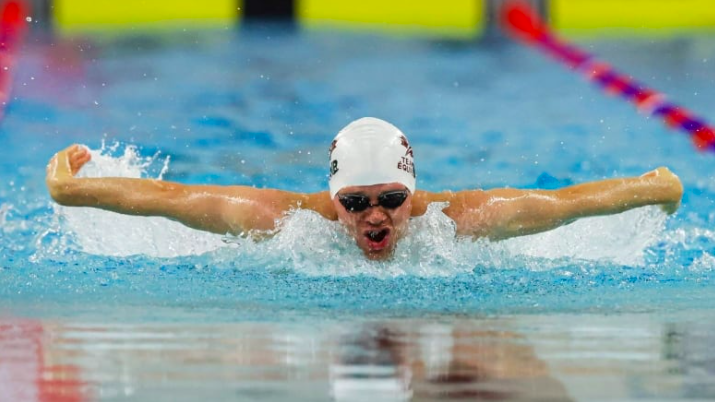
The conclusion of the 2022 Canada Games in Niagara left Team New Brunswick with 19 medals — 10 more than the nine medals won at their last winter Canada Games in 2019 but less than the 24 won at the summer games in 2017.
This year was one of Team New Brunswick’s best years yet. The 2017 Winnipeg games were the best for the team since the start of the games in 1967. In 2003, New Brunswick also took home 19 medals when the games were hosted in their home province and in 1995, they received 21 medals.
The Canada Games are held every two years, so after the 2019 games, they were meant to be held in 2021 but were postponed until this year.
“If we take into consideration all the delay and the postponement of the games and the lack of opportunities to train and compete against other jurisdictions throughout [the pandemic], I think we did really well reaching double digits,” said Sports New Brunswick interim CEO Sabrina Durepos about the medal count at the games.
- Team NB sets new personal best for medals at Canada Games
- ‘I am so proud of him’: Swimmer with autism wins 2 medals at Canada Games
The 19 medals brought home by Team New Brunswick are four gold, six silver and nine bronze.
They won seven swimming medals — one gold, two silver and four bronze. They won nine athletics medals — three gold, four silver and two bronze. They also won three bronze wrestling medals.
Nine of the 19 medals won by the province were in parasport categories.
Most-decorated Team New Brunswick athlete
Jesse Canney from Durham Bridge brought home the most medals for the team with six medals in para male swimming — one gold, two silver and three bronze. Canney only didn’t place in one event where he got fourth in the 50m freestyle.

Canney has autism and is partially non-verbal. But he was adamant that his favourite swimming events are 200m freestyle and 200m individual medley.
His mother, Pamela Moxon, said they wouldn’t find out where Canney placed until around five minutes after each event because a para points calculator is used since para-athletes in different classifications are competing against each other.
Moxon said this was the case for one of his favourite events, freestyle 200m, where he got silver.
- Canney strikes gold at Special Olympics World Games
- Special Olympics champion celebrated after 4-medal triumph on world stage
“It’s very confusing for Jesse because he looked like he won first place, and then they combined the points with the 400 freestyle and he came in second,” she said.
Moxon said they noticed Jesse had a knack for swimming at an early age so they enrolled him in swimming lessons when he was seven. Then he joined Special Olympics. Moxon said his coach thought he needed to be challenged more, so Canney joined the Fredericton Aquanauts Swim Team. A year after joining, he competed in the 2013 Canada Games.
Canney trains nine times a week with the Fredericton Aquanauts, once a week with the Special Olympics and three times a week in private training sessions.
In 2019, he also joined the Special Olympics Team Canada and went to Dubai to compete.
On Tuesday night, Canney was named the most-decorated athlete for Team New Brunswick.
- Hard work of Special Olympics gold medallist leads to new title and new skills
- Swimmer becomes 1st Special Olympian to win prestigious N.B. Sports Award
When combined with his medals from the 2017 Canada Games, he won the most Canada Games medals for Team New Brunswick, surpassing para-athlete Veronica Coombes, who had six medals.
“He’s just very proud. We’re just very proud of him,” Moxon said.
8th among provinces
New Brunswick came in eighth when it came to medals earned by provinces and territories. Saskatchewan came in seventh with 32 medals and Newfoundland and Labrador came in ninth with nine medals.
Durepos from Sports N.B. said it’s important to measure Team New Brunswick in comparison to their own performances in past games instead of against other teams.
“With personal bests and provincial records, I think it bodes well for the future,” she said.
Durepos said last fall, Sport N.B. launched an envisioning sport project to improve upon how sport is delivered in New Brunswick.
She said sport development is left up to different provincial sporting programs, but there’s more opportunity than just competitive pathways.
“It’s up to all of us to really look at what are the optimal competitions that are available at each different stage of development and making sure that we can provide opportunities for all New Brunswickers to participate, no matter what stage that they might be at,” said Durepos.
She said it’s important that there are avenues available for those who want to compete, but that it’s crucial there are quality sporting opportunities at all levels.
This story was originally published in CBC New Brunswick on Aug. 22, 2022.
 Hannah Rudderham Portfolio